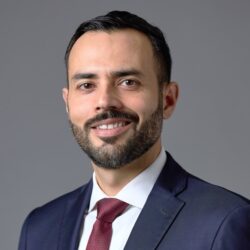
We caught up with former fellow, Santiago Papini, PhD, to learn about his current work and what the DSF meant to him.
Tell us about yourself.
For the last couple of years since graduating from the DSF I have been a tenure track Assistant Professor of Psychology at the University of Hawai‘i at Mānoa where I use data science and experimental methods to study interventions for people with trauma- and substance-related conditions. I also teach undergraduate and graduate research methods courses and just recruited my first graduate student for my Targeted Interventions Lab.
What have you been up to since completing the Delivery Science Fellowship?
I have been honing the skills I developed at KP working with large health system datasets. I’ve established a new research collaboration that uses Medicaid data from beneficiaries in Hawai‘i. I’ve also been writing a bunch of grant proposals.
How do you think about delivery science in your current work if at all?
I used to be completely focused on maximizing the effect size of an intervention, but after the DSF I have greater appreciation for how feasibility and reach can affect an intervention’s ultimate impact on individuals and society.
What are 1 or 2 things you learned during your fellowship that you still think about or find helpful?
A big one was how to communicate more effectively to broad audiences, including to non-scientists and stakeholders. This skill has served me well in my grant writing and collaborating with colleagues outside my field. Additionally, as a DSF informatics fellow, I focused a lot on how new technologies using AI can meaningfully augment rather than replace clinicians—and my research has continued to examine this idea.
What do you like to do outside of work?
I’m really enjoying Hawai‘i, sometimes surfing, but lately teaching my young son to boogie board.
What advice would you offer early-stage investigators who want their work to meaningfully impact care delivery?
I think it’s important to consider the potential impact of the research you are pursuing, but as an early-stage investigator I would not let those considerations stop you from exploring what you are really passionate about. We are at a stage where it’s relatively safe to take risks and pursue ideas even when the impact is not apparent—some of these pursuits may end up being the most impactful.
|