


Kaiser Permanente researchers find less overall health system use and costs in 6 months after a “brief intervention” in primary care for alcohol use problems
Patients who reported problem alcohol use used less medical care if they had a conversation with their primary care doctor about their drinking, according to new Kaiser Permanente research.
The study, published in the journal Addiction, looked at the cost effectiveness of a “brief intervention.” This is a short conversation initiated by a physician using specific techniques to assist a patient who screens positive for drinking alcohol above the low-risk guidelines, a process known as Screening, Brief Intervention and Referral to Treatment, or SBIRT.

The researchers looked at adult primary care patients who screened positive for unhealthy alcohol use between 2014 and 2017 at Kaiser Permanente Northern California (KPNC). Those who received a brief intervention with their doctor used $209 less in health care costs during the 6 months after the visit.
Previous research has shown SBIRT helps patients reduce problem drinking and related health problems such as hypertension. This is the first time the method’s cost effectiveness has been studied and confirmed, said study senior author Stacy Sterling, DrPH, MSW, co-director of the Center for Addiction and Mental Health Research at the Kaiser Permanente Division of Research.
“This has been a big gap in the field, understanding the cost-effectiveness of brief intervention,” Sterling said. “This study is showing short-term benefits in lowering utilization after brief intervention. The next step is learning whether there are long-term benefits of having these ongoing conversations with your doctor each time you come in, about how your drinking fits into your overall health.”
Health systems may be more interested in adopting SBIRT if they know it benefits patients and is also cost-effective, she said.
The cost analysis looked at overall health care usage and spending on emergency department visits, which dropped by an average of $11 during the 6 months after the brief intervention. “As SBIRT is a regular part of KPNC primary care now, it’s good to see that translates to savings for the health care system,” said lead author Sujaya Parthasarathy, PhD, a health economist with the Division of Research. “Providers may like to know that what they are doing really affects patient outcomes but also saves the system from unnecessary emergency room visits.”
The savings were higher for patients with chronic health conditions or substance use disorder. People with a high chronic condition score used $621 less in overall health care and $24 less in ED visits over 2 years after a brief intervention. Patients with alcohol use disorder had $33 lower emergency care costs.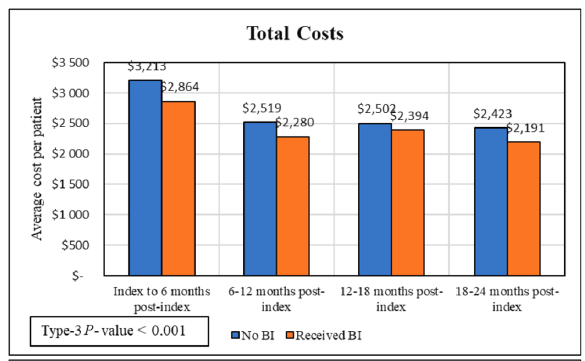
“These patients may be more resistant to changes in their use of the health care system, so it is especially remarkable that they may be reducing their alcohol use, experiencing better health and not needing that care,” Parthasarathy said.
SBIRT for alcohol now routine
The Alcohol as a Vital Sign initiative is a workflow introduced in 2014 in KPNC adult primary care in which patients are asked about their drinking in the previous 3 months and their answers are recorded in the electronic patient record. Those who screen positive for unhealthy drinking have a brief intervention (BI) with the doctor — a conversation in which the clinician uses motivational interviewing techniques to encourage a change in behavior. Patients may be referred to outpatient addiction medicine treatment if needed.

The research team has been studying SBIRT for more than a decade, producing multiple papers showing evidence that brief interventions reduce the amount of alcohol patients drink at 12, 15, and 18 months, Sterling said. Other studies have addressed alcohol-related health issues such as hypertension and blood pressure control. In 2023 the team published findings that patients with hypertension and unhealthy alcohol use were more likely to have lower blood pressure if they underwent screening and brief intervention.
“Each paper builds on the last, showing that brief intervention influences drinking outcomes, health outcomes and now, cost savings for the health care system,” Sterling said. “This provides additional evidence that might help convince health system leaders or policymakers that SBIRT is cost effective and important.”
With a greater general awareness of the potential health risks of moderate to heavy alcohol use, a validated method to assist patients in reducing their use is essential to patients, doctors, and the health care system, Sterling said. “Expanding the use of SBIRT — and training more physicians in non-judgmental, patient-centered motivational interviewing techniques — is an important part of reducing alcohol-related health risks.”
The study was funded by the National Institute on Alcohol Abuse and Alcoholism.
Felicia Chi, MPH, of the Division of Research was also a co-author.
###
About the Kaiser Permanente Division of Research
The Kaiser Permanente Division of Research conducts, publishes, and disseminates epidemiologic and health services research to improve the health and medical care of Kaiser Permanente members and society at large. KPDOR seeks to understand the determinants of illness and well-being and to improve the quality and cost-effectiveness of health care. Currently, DOR’s 720-plus staff, including 73 research and staff scientists, are working on nearly 630 epidemiological and health services research projects. For more information, visit divisionofresearch.kp.org or follow us @KPDOR.






Comments (0)