

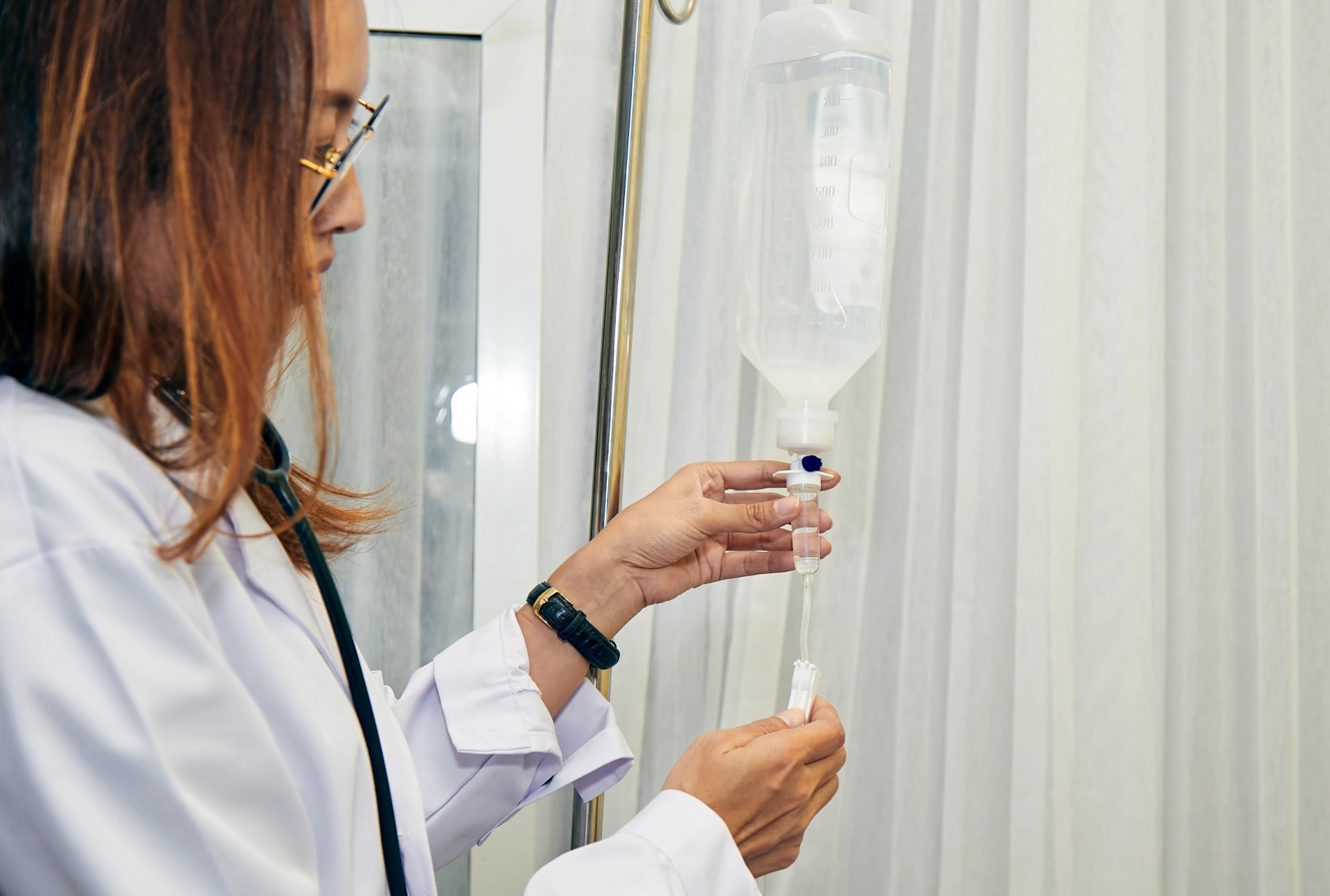
Kaiser Permanente study supports reassessment of treatment guidelines, which have favored slower correction for severe hyponatremia
Patients with dangerously low sodium levels — a condition known as severe hyponatremia — are at high risk for organ failure and death if they do not receive prompt treatment. However, it’s long been believed that correcting the levels slowly is both safe and necessary to avoid a rare form of brain damage.

But a new Kaiser Permanente study published in Annals of Internal Medicine challenges that assumption. The research found faster correction is associated with a lower risk of death or development of neurological problems. The findings support prior studies along with requests to update current treatment guidelines.
“Clinical guidance has increasingly shifted towards a slower correction strategy,” said lead author Dustin G. Mark, MD, an adjunct investigator with the Kaiser Permanente Division of Research and an emergency medicine and critical care physician with The Permanente Medical Group. “That’s because correcting sodium levels too quickly may cause osmotic demyelination syndrome, a rare complication that can result in permanent brain damage. The problem is that correcting sodium levels too slowly may also increase the risk of death. Ours is the largest single study to date that addresses this conundrum, and we found that, in the balance, outcomes were significantly better if the correction rate was above current recommendations.”
The study included 13,988 adults admitted to a Kaiser Permanente Northern California emergency department with severe hyponatremia between 2008 and 2023. The researchers analyzed electronic health records to identify the patients’ highest 24-hour serum sodium correction rate. The rates were categorized as slow (<8 milliequivalents per liter [mEq/L]); medium (8-12 mEq/L); or fast (>12 mEq/L).
. . . we found that, in the balance, outcomes were significantly better if the correction rate was above current recommendations.
— Dustin Mark, MD
Among the 13,988 patients studied, 587 patients subsequently developed a neurologic condition, such as damage to nerve fibers, paralysis, epilepsy, or altered consciousness, and 2,554 patients died within 90 days of their initial diagnosis. After conducting rigorous analyses that accounted for factors that might influence the physician’s treatment approach or the patient’s outcome, the researchers found that the patients who had faster correction rates were less likely to develop a neurologic problem or die than those who had slower correction rates.
The study found that patients who had fast correction rates spent, on average, one less day in the hospital, even though they were more likely to have extremely low sodium levels and to have been admitted to the intensive care unit. Additionally, whether patients were at higher or lower risk for death or neurologic problems, or had specific risk factors for osmotic demyelination syndrome, faster sodium correction was consistently associated with better outcomes.
A rare, dangerous condition
Sodium keeps the amount of water in and around cells at a healthy level, helps maintain normal blood pressure, and keeps nerves and muscles functioning properly. A healthy sodium level is between 135-145 mEq/L. The patients included in this study all had sodium levels that were 120 mEq/L or less, meeting the criteria for severe hyponatremia.

Hyponatremia can develop in athletes who drink too much water during long and intense workouts. Certain medications and medical conditions can also cause sodium levels to drop. When this occurs, people may develop symptoms of hyponatremia, such as nausea and vomiting, confusion, muscle weakness, or seizures, that require emergency care to increase sodium levels.
“There has long been clinical uncertainty on how fast to correct sodium levels in these patients,” said senior author Mary Reed, DrPH, a research scientist with the Division of Research. “The fear that a patient would develop a neurologic problem as the result of a fast correction rate led clinicians to favor slower correction. Because of the large number of patients we see in Kaiser Permanente Northern California, we were able to conduct rigorous analyses that showed across the board, even for the sickest patients, slower is not better.”
The study was funded by The Permanente Medical Group Rapid Analytics Unit Program.
Co-authors include Mubarika Alavi, MS, and Joshua R. Nugent, PhD, of the Division of Research.
###
About the Kaiser Permanente Division of Research
The Kaiser Permanente Division of Research conducts, publishes, and disseminates epidemiologic and health services research to improve the health and medical care of Kaiser Permanente members and society at large. KPDOR seeks to understand the determinants of illness and well-being and to improve the quality and cost-effectiveness of health care. Currently, DOR’s 720-plus staff, including 73 research and staff scientists, are working on nearly 630 epidemiological and health services research projects. For more information, visit divisionofresearch.kp.org.





Comments (0)