


Kaiser Permanente study finds highest cardiovascular risk in young adults and adults with prediabetes and obesity
Prediabetes — higher than normal blood sugar levels — is, by definition, a risk factor for diabetes. But new Kaiser Permanente research shows there is another reason to be concerned about prediabetes: it also increases risk for cardiovascular disease.

About one-third of American adults — more than 96 million people — have prediabetes, and it affects people of all ages. Studies estimate that 18% of adolescents and 24% of young adults have the condition.
“We have known for some time that people with prediabetes have a higher risk of developing diabetes,” said lead author Jamal S. Rana, MD, PhD, a cardiologist with The Permanente Medical Group (TPMG), and an adjunct investigator at the Kaiser Permanente Division of Research (DOR). “Our study adds to the evidence that in people with prediabetes, physiological changes are already underway that increase risk for cardiovascular disease. This suggests if we do more to identify and treat prediabetes — especially in younger adults — we can reduce the risk of both diabetes and heart disease.”
The study, published in the American Journal of Preventive Cardiology, included more than 1.3 million members of Kaiser Permanente Northern California (KPNC) ages 18 to 90. Half the group had a normal hemoglobin A1C (HbA1c) blood sugar level (below 5.7%). The other half had prediabetes, identified as an HbA1c of 5.7% to 6.4%. None had previously been diagnosed with diabetes or heart disease.
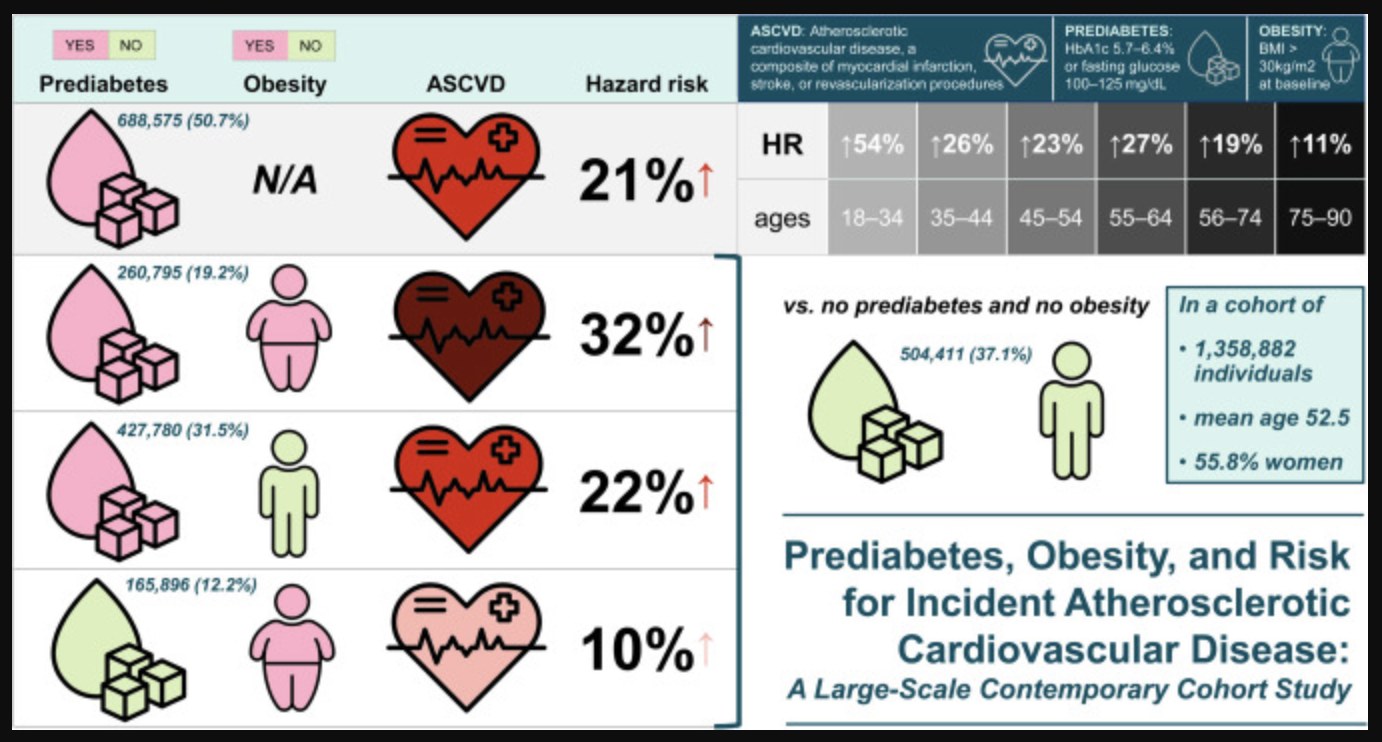 The study looked at these adults’ risk for atherosclerotic cardiovascular disease (ASCVD). This type of heart disease is caused when plaque — fat, cholesterol, and other substances — slowly builds up inside the arteries, making it hard for the blood to flow. This increases the risk for a heart attack, stroke, or needing surgery to treat blocked arteries.
Over the 5 years the adults were studied, there were 28,615 incidents tied to ASCVD. Of these, 20,664 (72%) occurred in the group with prediabetes and 7,951 (28%) in the group with normal blood sugar levels. This means the adults with prediabetes had a 21% higher risk of developing cardiovascular disease than the adults with normal blood sugar levels.

“Prediabetes can feel deceptively quiet — no symptoms, no alarms,” said TPMG Associate Executive Director Kevin C. Yee, MD, an internal medicine specialist. “But this study shows that at this early stage the biology that increases risk for heart disease is already in motion. It reminds me of an iceberg: what looks small on the surface, peeking out from the waves, can carry substantial risk underneath.”
Higher risk groups
About 31% of the 1.3 million people in the study had obesity, a known risk factor for prediabetes and type 2 diabetes. The study found that adults with both obesity and prediabetes had a 32% increased risk for cardiovascular disease. In contrast, adults with prediabetes alone had a 22% increased risk; adults with obesity alone had a 10% increased risk.

The study also showed that this increased risk starts early. Among the adults ages 18 to 34 those with prediabetes had a 54% increased risk for cardiovascular disease. In contrast, adults 35 to 44 with prediabetes had a 26% higher risk than adults of the same age with normal blood sugar.
“Physiologically, this makes sense,” said Mehreen Khan, MD, MPH, an endocrinologist with The Permanente Medical Group. “Chronic inflammation and insulin resistance are hallmarks of prediabetes and obesity, and when these begin manifesting in younger people, it sets the stage for other health problems, like cardiovascular disease. Also, when these conditions develop early, these young adults may also have a genetic predisposition for diabetes, and they are likely going to get there a lot faster compared to the person who doesn’t develop prediabetes until they’re 60.”

The researchers said the study provides more support for Kaiser Permanente’s emphasis on diabetes prevention. “Prediabetes is often underrecognized and undertreated,” said senior author Julie Schmittdiel, PhD, associate director for Health Care Delivery and Policy at DOR. “This study adds a whole new perspective because it suggests that when you treat prediabetes earlier you have the potential to prevent other health problems, especially in younger adults.”
Efforts are underway to implement a new program at Kaiser Permanente Northern California later this year to reduce members’ risk for diabetes. “We are going to begin looking for our members who are highest risk for progression to type 2 diabetes and would benefit most from early intervention. Our health education department will work with them to introduce lifestyle changes, or start them on medication, when appropriate, to help reduce their risk for both diabetes and cardiovascular disease,” said Khan. “Our goal is to make these programs as accessible as possible — asynchronous, virtual, or one-on-one — to best meet each member’s needs.”
Added Rana, “It’s exciting to know that our research is directly leading to changes in clinical care. The ethos of Kaiser Permanente is to act upstream — where prevention, integration, and coordinated care can change the entire course of a patient’s heart health.”
The study was funded by Kaiser Permanente Community Health.
###
About the Kaiser Permanente Division of Research
The Kaiser Permanente Division of Research conducts, publishes, and disseminates epidemiologic and health services research to improve the health and medical care of Kaiser Permanente members and society at large. KPDOR seeks to understand the determinants of illness and well-being and to improve the quality and cost-effectiveness of health care. Currently, DOR’s 720-plus staff, including 73 research and staff scientists, are working on nearly 630 epidemiological and health services research projects. For more information, visit divisionofresearch.kp.org.






Comments (0)