


Kaiser Permanente investigators’ work contributes to first clinical guidelines to improve care for patients with cardiovascular, kidney, and metabolic health conditions
The heart, kidneys, and metabolic pathways are intrinsically connected: when one organ or pathway isn’t functioning properly, another often develops problems too. It took decades for researchers to discover how and why this happens. As they did, their work also began to identify interrelationships between cardiovascular and kidney disease and obesity, type 2 diabetes, and other conditions such as metabolic dysfunction-associated steatotic liver disease. In 2023, the links between these health problems were recognized officially as a new disorder: cardiovascular-kidney-metabolic (CKM) syndrome.

In June, medical associations associated with the conditions that make up CKM syndrome issued the first guidelines to prevent, diagnose, evaluate, and manage the syndrome. People with CKM syndrome often have more than one of the contributing conditions, and these conditions can interact to bring on or worsen one of the associated health problems. The new guidelines are expected to help the many medical specialists that treat conditions within CKM syndrome provide patients with coordinated and comprehensive care.
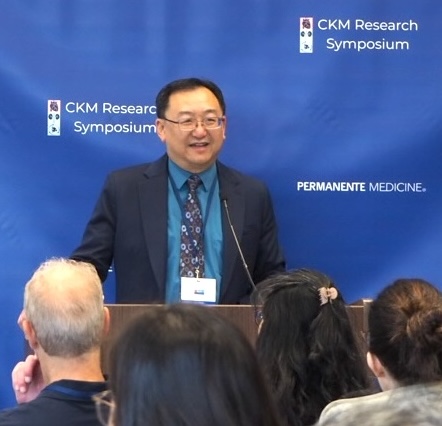
Alan Go, MD, is an associate director at the Kaiser Permanente Northern California Division of Research (DOR), where he leads the Cardiovascular, Kidney, and Metabolic Health Research Section. Go said the section’s name was updated — from Cardiovascular and Metabolic Conditions — in 2024 to recognize the breadth of kidney research it performs and the health care people with CKM syndrome require.
We spoke with Go about DOR investigators’ contributions to the research that helped identify the syndrome and frame the guidelines, what the guidelines mean for patients, and important areas for future research.
Q: How did research make connections between cardiovascular disease, kidney disease, obesity, type 2 diabetes, and related metabolic conditions to identify CKM syndrome?
A: Without research, we would not understand that these are not isolated organ systems and conditions, that they have multidirectional relationships, and that the different risk factors and conditions synergistically affect the risk of clinical disease. For example, obesity can contribute directly or indirectly to changes that affect blood vessels and vascular function as well as cardiac structure. Also, we previously thought that kidney dysfunction was just a kidney problem. But research shows it can have direct and indirect effects on the heart. Similarly, we know that excess protein in the urine is a known major risk factor for kidney failure, but it’s also a key marker of underlying vessel and cardiac dysfunction.
The guidelines make clear to the physician community broadly that we need to think about all the CKM risk factors and conditions together.
— Alan Go, MD
Q: How did DOR investigators contribute to making these connections?
A: We’ve been studying this for a long time. In the early 2000s, we published seminal work showing that reduced kidney function was one of the strongest risk factors for heart failure, coronary heart disease, ischemic stroke, and death. In more recent studies, we’ve shown very disturbing trends of overweight and obesity increasing at a faster pace over time in the population overall and in specific patient groups, putting more people at risk for CKM syndrome. We’ve also learned that certain racial and ethnic populations are at early risk for premature heart failure. These findings helped us to tailor how we might screen for health issues like early cardiac damage.
Q: Did Kaiser Permanente’s care model help in developing or framing those studies?
A: Absolutely. Our integrated care model and our integrated, comprehensive data infrastructure have given us the key data we need to study clinical outcomes and risk factors and how they change over time. Having that data coordinated in one place on such a big scale is a major advantage. It enables us to identify CKM risk factors and ways we might be able to reduce them.
Q: How did studies done at DOR inform the guidelines?
A: Our research has led to improvements in the ways we identify and stratify patients with CKM syndrome who are at low risk or at high risk of being diagnosed with a serious cardiovascular or kidney health concern. We’ve also examined the relationship between the quality-of-care patients receive and how well risk their risk factors are controlled.
One example is managing high blood pressure. We’ve shown that if you have a multipronged program targeting all the barriers for achieving good blood pressure control — as we do at Kaiser Permanente — over 85% of patients with high blood pressure can meet their targets. We’ve also worked to understand how to use medical therapies in people at high risk for heart failure or chronic kidney disease, and to identify who is most and least likely to benefit from a specific therapy.
Q: In what ways will the guidelines improve care for patients?
A: Most importantly, the guidelines provide a roadmap to promoting patients to receive more systematic, comprehensive care. That starts with evaluating their risk factors. Right now, someone who has high blood pressure may not have their kidney function checked or be screened for diabetes. The guidelines make clear to the physician community broadly that we need to think about all the CKM risk factors and conditions together to make sure patients get systematic screening and optimal management.
Q: What are important areas for future research in CKM syndrome and how are DOR researchers contributing?
A: Personalized risk prediction needs to be improved, and preventive and therapeutic strategies tailored according to a person’s individual risk. Across different stages of CKM severity, we need to be able to apply the most effective screening and management strategies at both the individual patient level and the population level. We also need to identify which current therapies are best for which patients as well as continue to develop new therapies. Learning more about what’s unique to different combinations of CKM risk factors and conditions will help us improve our ability to identify new therapeutic targets.
Investigators and clinicians throughout KPNC are working together to identify how to provide the best integrated care for people with CKM syndrome — and that’s a great thing to be part of.
Update: In September 2026, the American Society of Nephrology issued its own guidelines, co-authored by Go, on caring for patients with kidney disease who have Cardiovascular-Kidney-Metabolic Syndrome.
###
About the Kaiser Permanente Division of Research
The Kaiser Permanente Division of Research conducts, publishes, and disseminates epidemiologic and health services research to improve the health and medical care of Kaiser Permanente members and society at large. KPDOR seeks to understand the determinants of illness and well-being and to improve the quality and cost-effectiveness of health care. Currently, DOR’s 720-plus staff, including 73 research and staff scientists, are working on nearly 630 epidemiological and health services research projects. For more information, visit divisionofresearch.kp.org.





Comments (0)