


Teen use then declined during the COVID-19 pandemic, Kaiser Permanente study finds
Teen cannabis use in Northern California increased following the legalization of adult recreational cannabis and later declined during the COVID-19 pandemic, according to new research from Kaiser Permanente published in JAMA Network Open.
The study analyzed 1.3 million well-child pediatric visits among Kaiser Permanente patients aged 13 to 17 between 2011 and 2024. At each well-child visit, adolescents completed a confidential screening questionnaire that included questions about substance use.

Cannabis use among teens had been steadily declining for years prior to legalization, from 10.4% reporting past-year use in 2011 to 6.8% in 2016, the year California voters approved recreational cannabis. After legalization, rates began increasing, reaching 8.1% in 2017 and 9.5% in 2018, and continued to rise as retail sales were implemented.
Researchers suggest the increase may reflect shifting perceptions and greater access. Adolescents may have viewed cannabis as more socially acceptable and less risky, alongside increased availability, lower prices, and the rise of vaping products, including flavored options.
More research is needed to understand the complex mix of factors that motivate teens to use cannabis, the study authors said. But the results suggest that societal factors likely influence use, said lead author Kelly Young-Wolff, PhD, MPH, a research scientist with the Kaiser Permanente Division of Research.
“We saw adolescent cannabis use begin to rise after legalization was passed and before retail sales began,” Young-Wolff said. “This suggests that changes in social norms and perceptions may play an important role in shaping teen behavior.”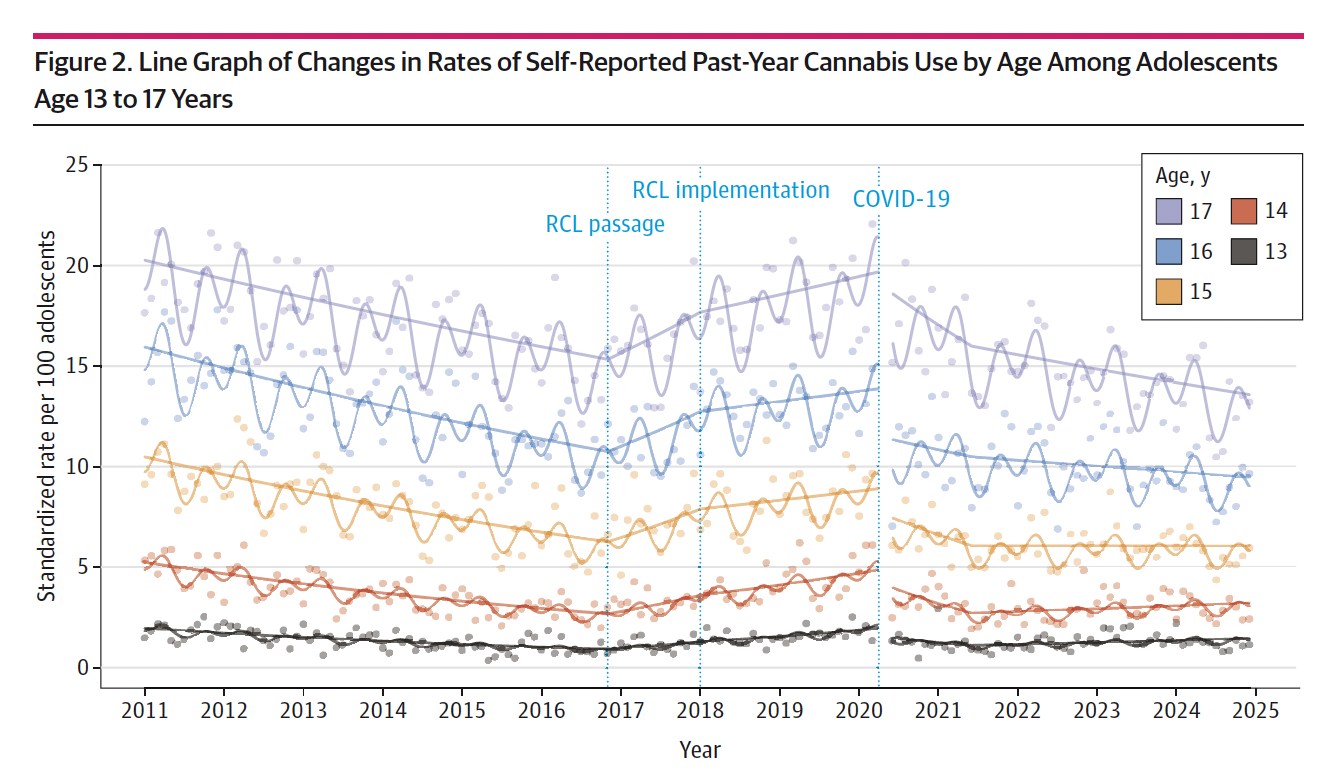
After the COVID-19 pandemic began, trends shifted again. Cannabis use among teens declined during the COVID-19 pandemic, with the biggest declines seen between March 2020 to June 2021.
The findings are consistent with national data showing declines in adolescent substance use during the pandemic. Possible contributing factors include reduced social interaction, increased parental supervision, and decreased access to substances.
The study also found that adolescent cannabis use has continued to decrease slightly in the years after the COVID-19 pandemic when schools have reopened, from 7.0% in 2021 to 6.5% in 2024.
“This study provides a long-term view of how adolescent cannabis use changes in response to major societal events over 14 years,” said Stacey Alexeeff, PhD, senior author of the study. “We used interrupted time series analysis, which allows researchers to see changes that coincide with the timing of a major event or policy while accounting for long‑term trends.”

Strengths of the analysis include its large size, use of standardized screening in routine pediatric care, and ability to examine trends over more than a decade. The researchers also used advanced statistical methods to evaluate changes associated with legalization and the pandemic.
“Adolescent substance use is shaped by a complex set of factors,” Young-Wolff said. “Our findings suggest that broader social and structural changes, such as legalization and public health measures, may influence behavior in meaningful ways.”
The researchers note that additional studies are needed to better understand how local cannabis policies, including retail access and advertising, affect adolescent cannabis use following state legalization.
The study was funded by the National Institute on Drug Abuse.
Additional co-authors were Natalie E. Slama, MPH, Stacy A. Sterling, DrPH, MSW, MPH, Derek D. Satre, PhD, Cynthia I. Campbell, PhD, MPH, and Monique B. Does, MPH, of the Division of Research; Rosalie Liccardo Pacula, PhD, of the University of Southern California; and Alisa A. Padon, PhD, and Lynn D. Silver, MD, MPH, of the Public Health Institute.
###
About the Kaiser Permanente Division of Research
The Kaiser Permanente Division of Research conducts, publishes, and disseminates epidemiologic and health services research to improve the health and medical care of Kaiser Permanente members and society at large. KPDOR seeks to understand the determinants of illness and well-being and to improve the quality and cost-effectiveness of health care. Currently, DOR’s 720-plus staff, including 73 research and staff scientists, are working on nearly 630 epidemiological and health services research projects. For more information, visit divisionofresearch.kp.org.






Comments (0)