

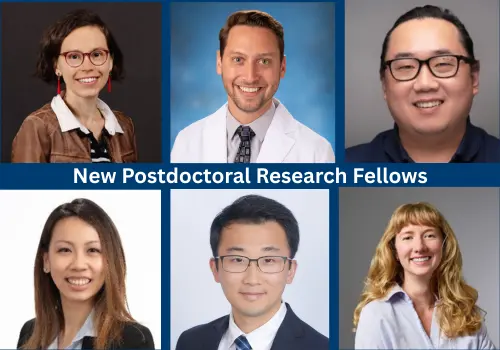
These fellows are bringing fresh ideas to studies in the fields of delivery science, clinical informatics, and mental health
The new postdoctoral research fellows recently welcomed to the Kaiser Permanente Division of Research (DOR) illustrate the breadth of research opportunities available through the Delivery Science Fellowship and Clinical Informatics Fellowship programs supported by The Permanente Medical Group, along with DOR’s Women’s and Children’s Health Fellowship.
We asked our 6 newest fellows to tell us why they believed DOR was the best place for them to launch their research careers.
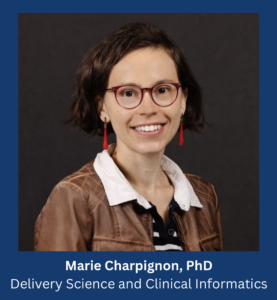 Marie Charpignon, PhD
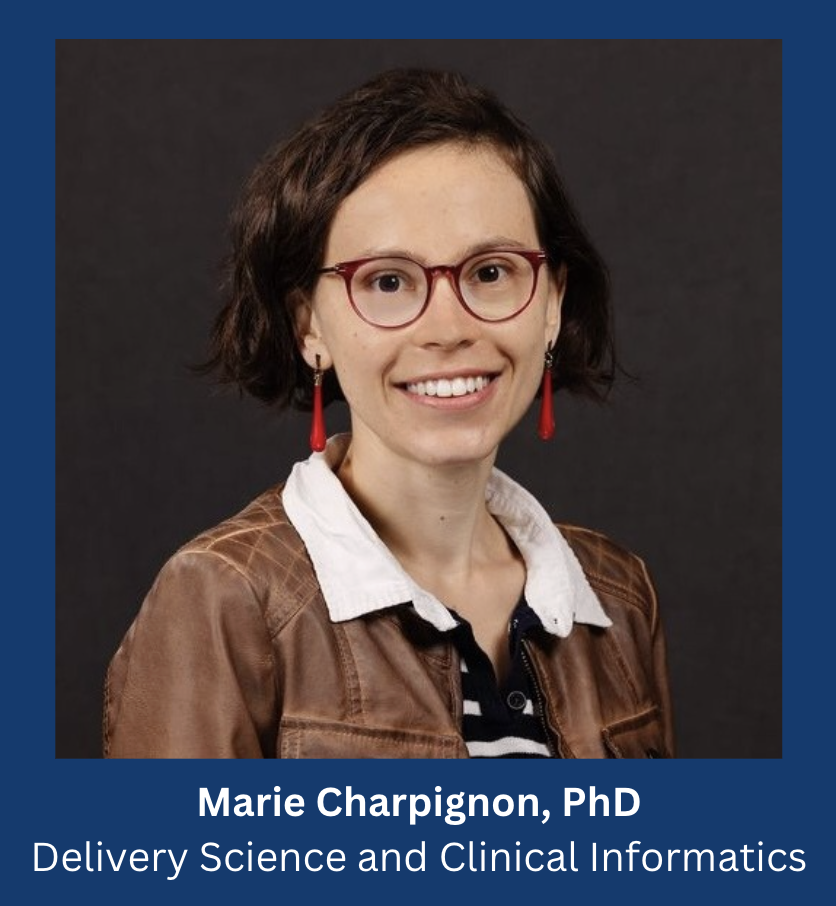
Charpignon is a postdoctoral fellow in delivery science and clinical informatics. She earned her PhD in Social & Engineering Systems and Statistics at the Massachusetts Institute of Technology. Her research, jointly supported by UC Berkeley, focuses on causal inference methods in pharmacoepidemiology to assess real-world drug effectiveness and adverse events. Her mentors are Vincent Liu, MD, MS, Romain Neugebauer, PhD, Paola Gilsanz, ScD, and Cathy Schaefer, PhD.
Why did you want to be a research fellow at DOR?
My research goal is to use electronic health record and claims data to generate real-world evidence faster and to design pharmaceutical, behavioral, and social interventions that can be tailored to an individual, household, or community. While earning my PhD, my mentors underscored the strength of Kaiser Permanente’s learning health system and DOR investigators. In my initial conversations with Vinnie Liu and Paola Gilsanz, I learned that their interest in clinical informatics, critical care, causal inference, and aging greatly overlapped with mine. Our talks sparked several research ideas and made it clear to me that DOR was the place I wanted to be.
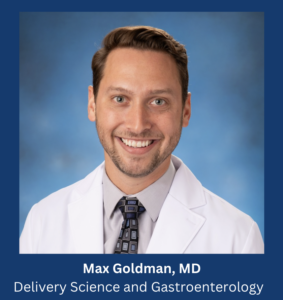 Max Goldman, MD
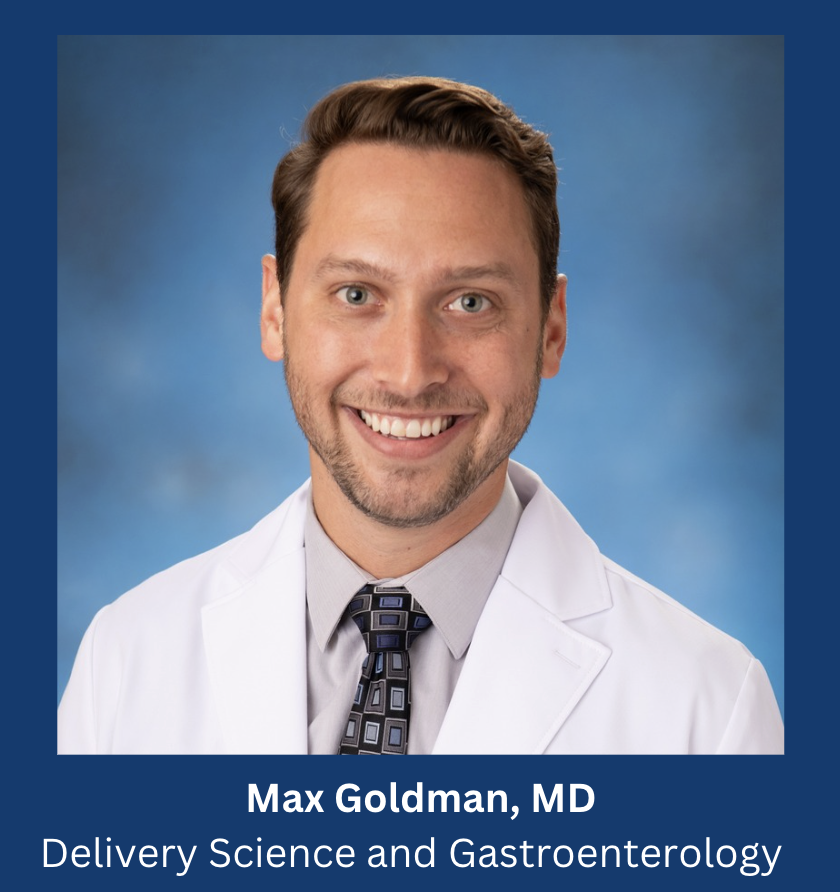
Goldman is a clinical delivery science fellow studying ways to promote evidence-based therapy in the treatment of moderate to severe inflammatory bowel disease. He earned his medical degree at Emory University School of Medicine and completed his medical residency at the University of California, San Francisco. Goldman is mentored by Jeff Lee, MD, MPH, and Fernando Velayos, MD.
Why did you want to be a research fellow at DOR?
As a physician researcher, being a part of DOR provides me with unparalleled training and access to myriad resources. The integrated health system allows for boundless opportunities to understand and analyze population level health data dating back decades, enabling research fellows to create lasting impacts and implement evidence-based solutions that improve care delivery for millions. The collaborative environment encourages multidisciplinary teams that provide mentorship from world-class experts and peer researchers with assistance from exceptional biostatisticians and project support team members.
 Andrew Huang, PhD

Huang earned his PhD in Health Services Research at Brown University. He will join DOR in Februrary 2026 as a delivery science fellow. Huang’s research will explore ways to use data to improve care processes in the emergency department setting with mentorship from Mary Reed, DrPH.
Why did you want to be a research fellow at DOR?
I was excited about the opportunity to work directly with clinicians and researchers at DOR to address real-world problems in medical decision-making, as well as to work in an environment that offers exposure to the breadth of research questions unique to a learning health system. Before starting, I discussed my interests in health services research and predictive modeling with Mary Reed, and it has been a rewarding experience to navigate my postdoctoral career under her mentorship and guidance.
 Cindy J. Huang, PhD

Huang is a postdoctoral fellow in the Women’s and Children’s Health Section. She completed her PhD in counseling psychology at Columbia University. Her research focuses on the intersection of mental health and chronic conditions among youth. Huang is mentored by Ai Kubo, MPH, PhD.
Why did you want to be a research fellow at DOR?
I was initially drawn to DOR because of my mentor Ai Kubo’s work and our shared interests in addressing health disparities for diverse youth populations. I was also seeking rigorous training in epidemiologic methods to pursue clinical research on youth with comorbid mental health and chronic health conditions. This is a pivot from my previous research experiences. DOR felt like the ideal place to conduct this kind of interdisciplinary research that could directly impact clinical care, while being surrounded by other passionate and productive researchers who are invested in the same goals.
 Michael Ou, MD
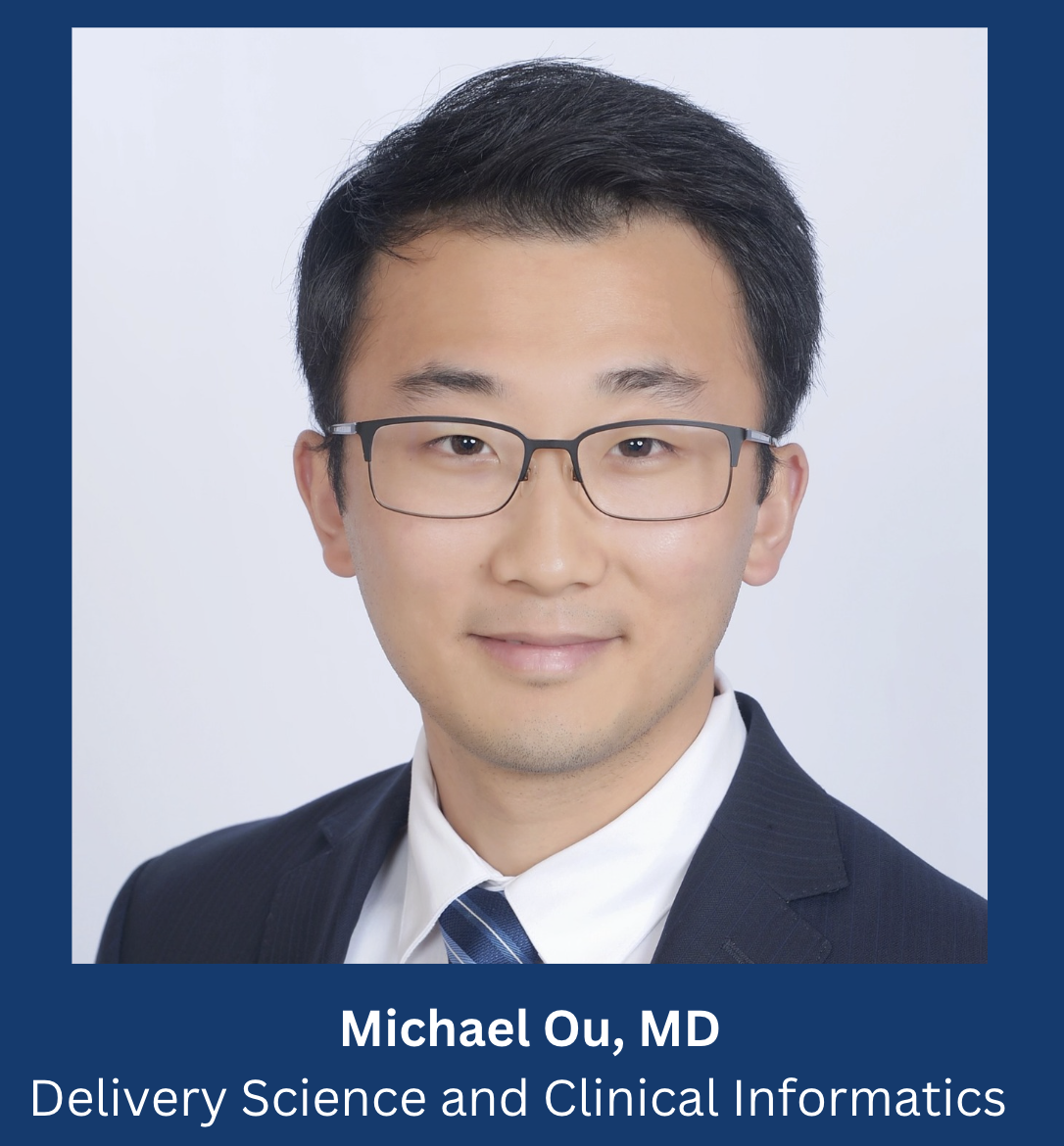
Ou is a postdoctoral fellow in delivery science and clinical informatics. He is currently completing his residency in general surgery at the University of California, San Francisco, after earning his medical degree from Johns Hopkins School of Medicine. Ou’s research is examining how AI might be used to improve surgical care and outcomes. He is mentored by Vincent Liu, MD.
Why did you want to be a research fellow at DOR?
I joined this fellowship because I know it will help develop me into a surgeon-scientist. This program provides the training, infrastructure, and mentorship to take my current background in surgical outcomes research to the next level. My focus in data informatics allows me to collaborate with and learn from a range of professionals in various disciplines, and I am excited to develop skills that otherwise would have never been possible!
 Jackie Roger, PhD

Roger is a postdoctoral fellow in delivery science. She earned her PhD in biological and medical informatics at the University of California, San Francisco. Roger is studying research gaps related to gynecologic care. Her mentors are Susanna Mitro, PhD, and Monique Hedderson, PhD.
Why did you want to be a research fellow at DOR?
I was drawn to DOR for its interdisciplinary nature, close collaboration between researchers and clinicians, and the opportunity to learn from my mentors Dr. Monique Hedderson and Dr. Susanna Mitro. I am happy to be embedded in a few different communities here: my cohort in the delivery science fellowship program, the scientists in the Women and Children’s Health Section, and the broader postdoc community throughout the division. Coming from a bioinformatics background, it has been fun to apply my computational training while gaining new training in epidemiological methods and delivery science research. I love to learn, and DOR is an excellent learning environment.



Comments (0)