


Kaiser Permanente study supports self-collection for HPV testing
About 1 in 5 patients chose to have a cervical cancer self-screening test mailed to their home rather than be screened in the office with an exam — but multiple factors appeared to affect which patients opted in, a new Kaiser Permanente study found.

“One way we can potentially increase participation in screening is by giving patients the option to collect their screening test at home, since the need for an appointment or a pelvic exam can be a barrier for many patients,” said lead author Betty Suh-Burgmann, MD, an adjunct investigator with the Kaiser Permanente Division of Research and a gynecologic oncologist with The Permanente Medical Group. “But we also need to be sure that we offer the option in a way that supports equity in its use.”
For the study, published in JAMA Network Open, researchers identified 13,714 patients ages 25 to 62 in 2 service areas in Kaiser Permanente Northern California who were due for routine cervical cancer screening. All the patients received an email asking if they would like to do their screening at home using a kit to test for human papillomavirus (HPV) — the virus that can cause cervical cancer — rather than schedule an office visit. The kit contained testing instructions, a swab for HPV testing, and a postage-paid return envelope. Patients were asked to return the completed test within 60 days.
Overall, 2,557 (18.6%) of the patients requested a kit and 1,382 (54%) returned the completed test within 60 days. Those who sent back their test were more likely to be 45 or older and not severely overdue for cervical cancer screening, while those who did not return the test were more likely to have a higher BMI or multiple medical conditions.

Participation was highest for White patients, with White patients making up 39% of the study population but 53% of those completing home screening; Hispanic patients made up 21% of the study population but only 12.5% of those completing home screening. Socioeconomic status and travel distance to a medical center appeared not to play an independent role in whether a patient returned a test.
“For decades, cervical cancer screening has required a pelvic exam performed by a health care provider,” said senior author Julie Schmittdiel, PhD, associate director of Health Care Delivery and Policy and a DOR research scientist. “Now, new technologies are being introduced that make it possible for patients to do self-testing either in a clinical setting and at home. This type of research is one example of how we can use Kaiser Permanente’s integrated learning health system to guide us in implementing new tests or programs in order to ensure they have the greatest impact on as many patients as possible.”
A new way to test
The American Cancer Society estimates that this year in the U.S. about 13,490 women will be diagnosed with cervical cancer and about 4,200 will die from the disease.
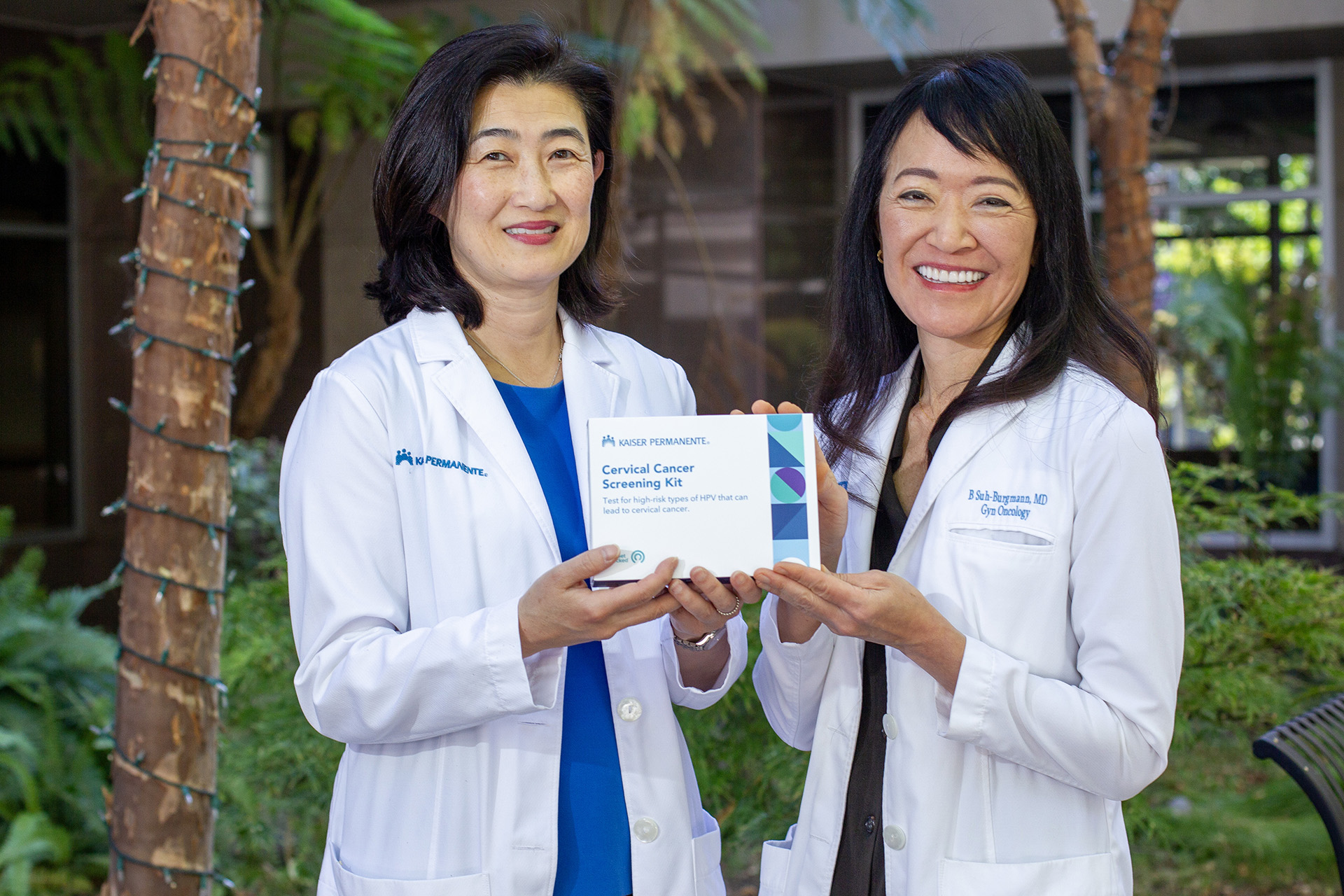
Almost all cases of cervical cancer are caused by chronic HPV infection. Routine screening for people with a cervix between ages 21 and 65 creates an opportunity to treat pre-cancerous changes before they become cancerous. In 2024, the U.S. Food and Drug Administration approved the first patient HPV self-collection kit for use in a medical setting.
The Health Resources and Services Administration updated its screening guidelines in January 2026 to include the option for average-risk women to self-collect their screening sample. Self-collection for HPV for cervical cancer screening is also endorsed by the United States Preventive Services Task Force and the American Cancer Society. HPV self-collection has also been used in other countries for many years, with nearly 1 in 4 women in the Netherlands and Australia being screened using this method.
Other Kaiser Permanente regions have implemented or are in the process of implementing self-collection options. A recent study by the Kaiser Permanente Washington Health Research Institute reported that HPV self-collection was associated with a 2.2% increase in screening rates.
On May 1, the home screening test became available throughout Kaiser Permanente Northern California to all eligible members. Screening at an outpatient lab with self-collection is also available.
“Cervical cancer screening programs have dramatically reduced deaths from cervical cancer,” said Suh-Burgmann. “The screening test that works is the one that patients will do, and our study suggests at-home screening is preferred by some patients.”
The study was funded by the The Kaiser Permanente Northern California Delivery Science Program.
Co-authors include Yun-Yi Hung, PhD, of the Division of Research, and Tracy Seo, MD, and Kari Carlson, MD, of The Permanente Medical Group.
###
About the Kaiser Permanente Division of Research
The Kaiser Permanente Division of Research conducts, publishes, and disseminates epidemiologic and health services research to improve the health and medical care of Kaiser Permanente members and society at large. KPDOR seeks to understand the determinants of illness and well-being and to improve the quality and cost-effectiveness of health care. Currently, DOR’s 720-plus staff, including 73 research and staff scientists, are working on nearly 630 epidemiological and health services research projects. For more information, visit divisionofresearch.kp.org.



Comments (0)