


Designed by Kaiser Permanente researchers, the tested program limited excess weight gain for high-risk patients
Some weight gain during pregnancy is healthy but gaining too much is linked to health risks for mother and baby — particularly for women who are overweight or obese when they become pregnant. In a recent study, a new mobile app-based program successfully helped overweight or obese women avoid excess weight gain while pregnant.

The Lifestyle, Eating, and Activity in Pregnancy (LEAP) program was developed by Kaiser Permanente researchers, who reported the study findings April 20 in JAMA Network Open.
“Our results are especially exciting because we intentionally designed the LEAP program to be feasible for widespread implementation,” said first author Monique Hedderson, PhD, principal investigator with the Kaiser Permanente Division of Research (DOR). “This study represents the culmination of years of research on what works well for this high-risk population and how to leverage technology to make those benefits achievable across a health system.”
In the U.S., about half of all expecting mothers who are overweight or obese gain more weight while pregnant than national guidelines recommend. Excess weight gain puts moms-to-be at higher risk of gestational diabetes, preeclampsia, and other health issues. Their babies are more likely to be born pre-term or at a larger size, which can cause delivery complications and increase the infant’s later risk of obesity.
“Excess gestational weight gain among these high-risk patients is a common and challenging issue in routine prenatal care,” said senior author Assiamira Ferrara, MD, PhD, a DOR senior research scientist. “What’s compelling about the LEAP study is that it shows we can support healthier weight gain using scalable, technology-enabled tools that fit within real-world clinical workflows, without adding burden for patients or clinicians.”

The LEAP trial provided patients with a digital scale to take home; participants were also provided with a Fitbit or allowed to use their personal Apple Watch to track physical activity. These linked to a mobile app that provided personalized, automated feedback on weight gain and activity. Patients also received weekly app-based education sessions, which encouraged achievable exercise and nutrition goals. Meanwhile, their clinicians received extra guidance on discussing weight gain with pregnant patients.
Key to the LEAP program is its adaptability. Only patients with accelerated weight gain receive personalized chat messages from a lifestyle coach, and if their weight continues to accelerate, they can speak with a coach by phone.
“About half of patients in the LEAP intervention group managed weight well on their own, but for those inching towards the upper limit of recommendations, LEAP provided extra, targeted support,” said Hedderson. “This conserves resources for patients who need help the most.”
To assess LEAP’s effectiveness, 58 Kaiser Permanente Northern California clinicians gave all of their pregnant patients who were overweight or obese the option to participate in the study. The clinicians were randomly assigned to provide consenting participants with either standard care with the LEAP program or, for comparison, current standard care for gestational weight management.
Out of 1,256 total participants, 677 received the LEAP program and 588 received standard care. In standard care, patients at their first prenatal visit receive a newsletter with healthy weight gain goals and recommendations for healthy habits. At the 20-week visit, clinicians are expected to show the patient how their weight gain compares with guidelines.
 In the study, patients in the LEAP intervention group had significantly lower weekly rates of weight gain, as well as lower total weight gain during pregnancy, than patients who received standard care. Fewer patients in the LEAP group than in standard care exceeded U.S. guidelines for weekly and total weight gain. LEAP patients were also less likely to have an infant who was large for their gestational age.
“This study demonstrates that combining wireless self-monitoring tools with an adaptive digital intervention can make a meaningful difference for patients with overweight or obesity at risk of excess weight gain during pregnancy,” said Kari Carlson, MD, director of women’s health for The Permanente Medical Group. “Importantly, it was tested in routine care, making the findings highly relevant for health systems looking for practical solutions.”

Although all 677 patients in the LEAP group were included in the analysis, only about half actually engaged with the program, reflecting real-world practice, in which some patients may not engage with programs they enroll in.
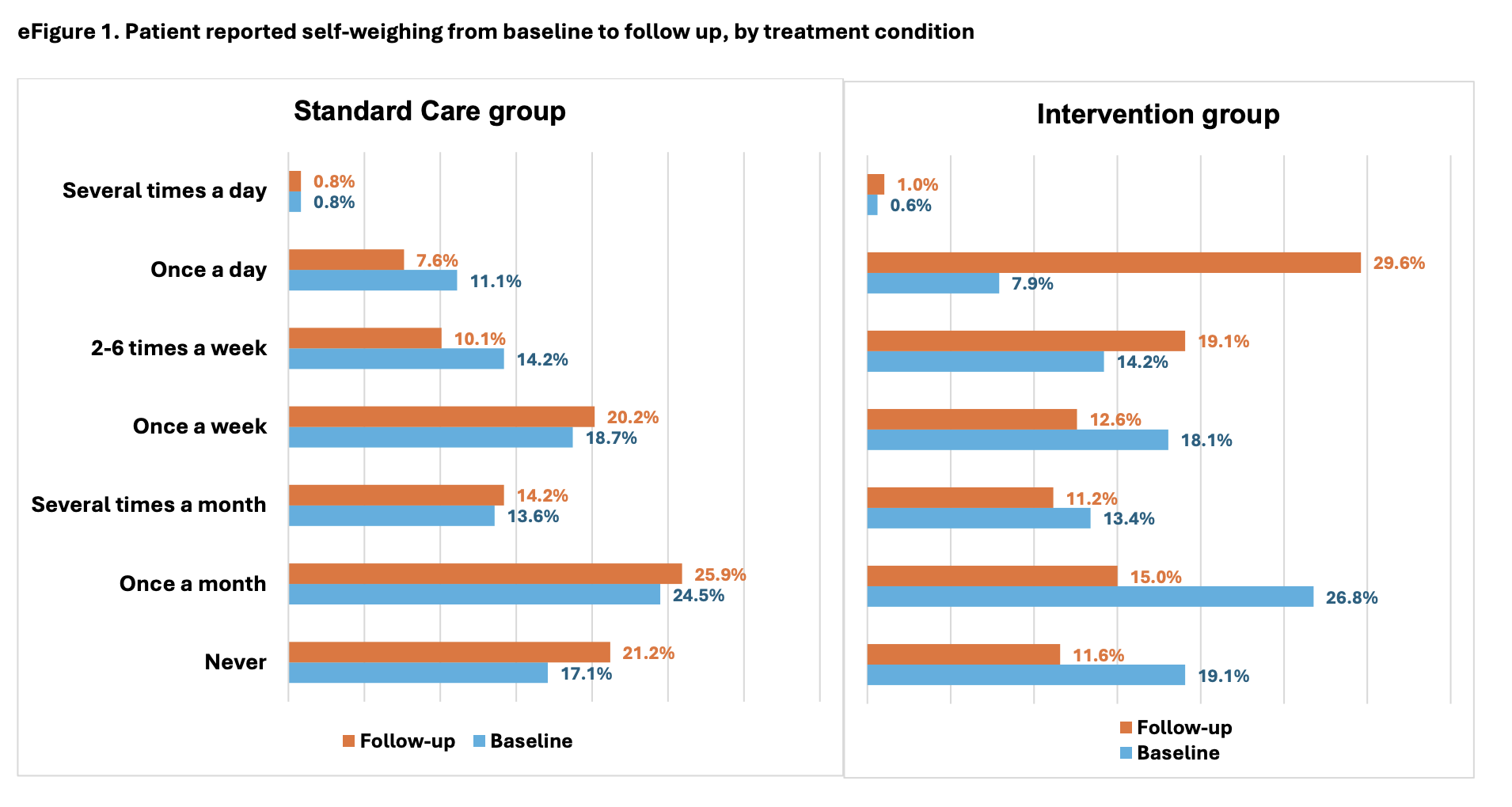
“When we zoomed in on participants who actually engaged, we found that the more they engaged, especially by weighing themselves consistently, the less weight they gained,” Hedderson said. When participants weighed themselves, their weight was graphed in relation to the Institute of Medicine guidelines for gestational weight gain. “This seems to be a particularly effective component of the program,” she said.
The research team is hopeful that the LEAP program could soon be implemented into routine care. Meanwhile, they continue to follow the study participants to track long-term outcomes.
“Bottom line, using technology to help patients manage their own health can be effective, and patients tend to like it, too,” Hedderson said.
The study was funded by the National Institutes of Health.
Additional coauthors were Susan D. Brown, PhD, Charles P. Quesenberry, PhD, Fei Xu, MS, Emily Liu, MPH, Karen L. Li, MPH, Sneha B. Sridhar, MPH, Tali Sedgwick, RDN, Page Kissel, BA, and Hillary D. Serrato Bandera, BA, of the Division of Research; Mibhali M Bhalala, MD, of Kaiser Permanente Northern California; and Cheryl Albright, PhD, MPH, of the University of Hawaii at Manoa School of Nursing and Dental Hygiene.
###
About the Kaiser Permanente Division of Research
The Kaiser Permanente Division of Research conducts, publishes, and disseminates epidemiologic and health services research to improve the health and medical care of Kaiser Permanente members and society at large. KPDOR seeks to understand the determinants of illness and well-being and to improve the quality and cost-effectiveness of health care. Currently, DOR’s 720-plus staff, including 73 research and staff scientists, are working on nearly 630 epidemiological and health services research projects. For more information, visit divisionofresearch.kp.org.





Comments (0)